


Archero
4.373.70K Reviews
App Specs
- Version
- 8.1.1
- Updated On
- License
- Free
- Downloads
- 50,000,000+
- Developer
- Habby
- Categories
- Action
- Platform
- Android, iOS
Screenshots






 Analysis by AppCompare
The first thing I notice about Archero is how quickly it gets me into the action. I steer a lone hero through rooms of enemies, then pause to attack: the character fires automatically when I stop moving. That simple rule makes every choice immediate. Do I hold my ground for a clean shot, or keep moving because an enemy is closing in? It is an easy game to understand, but not always an easy one to play well.
A control scheme that makes movement the first decision
That stop-to-shoot rhythm is the game’s defining idea, and it gives even a small encounter a satisfying push and pull. I am not juggling a separate attack button while dodging; instead, I have to decide when it is safe to stop. A brief pause can deal damage, while a poorly timed one can leave me exposed. For a phone game, that keeps the action readable without making it feel entirely automatic.
This setup works particularly well when I have only a few minutes. I can pick it up, move through a room, and understand what went wrong if I take a hit. It is less suited to someone who wants uninterrupted, high-speed button pressing: the tension comes from choosing where to stand and when to fire, not from a complicated control layout.
The Adventure Begins
As soon as you boot up Archero, you’re thrown into a vibrant world where you play as a lone hero, armed with nothing but a bow. The game is all about surviving waves of enemies, each more challenging than the last. The controls are super intuitive: you move with a joystick on the screen, and your character automatically shoots when you stop moving. It’s kind of genius in its simplicity.
Each level is randomly generated, so you never really know what you’re going to face next. This keeps the gameplay fresh and exciting. The graphics are colorful and engaging, making each level a joy to explore. I found myself eagerly anticipating what kind of enemies I’d face in the next room.
Reading a room instead of rushing through it
The useful habit I developed was to treat movement as both defense and timing. Rather than constantly sweeping the joystick, I look for a safe moment to stop and attack, then move again before an enemy’s approach makes that spot risky. This is a small adjustment, but it makes the automatic shooting feel like a deliberate tool rather than a convenience that plays the game for me.
Random room layouts also change how I approach a run. I cannot rely on a memorized route to solve every encounter, so I pay attention to what is happening in front of me and adapt. That variety is a strength, though it can also make a difficult attempt feel less predictable than a carefully scripted action game. Players who prefer learning fixed patterns may find that trade-off frustrating.
Worth Reading Before You Choose

EA SPORTS FC Mobile 26 Is a Bigger Football Game, but It Takes Time

Flipboard Shows What News Apps Must Do Beyond the Feed

Switching to Android Auto Means Rethinking Your Driving Routine

Google Calendar Makes a Crowded Week Easier to Manage

Ludo King Makes the Most of the Minutes Between Plans

Baby Panda World Brings Quick Play to Modern Phones, but Its Game Library Feels Busy
Power Up and Level Up
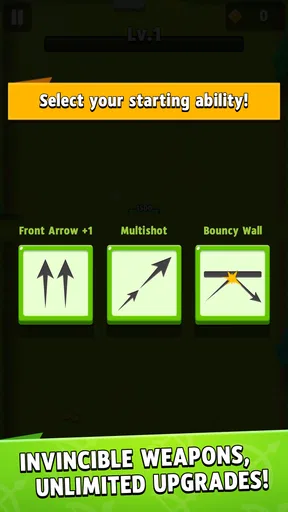
One of the most engaging features of Archero is the ability to power up your hero in various ways. As you advance through levels, you collect items and abilities that enhance your character. You can choose from different power-ups, like increased attack speed, multishot, or even elemental arrows. It’s all about finding the right combination that suits your play style.
Leveling up is crucial because, trust me, the enemies don’t take it easy on you. The game has a steep learning curve, and you’ll need to strategize to get through tougher levels. But that’s part of the fun! It’s rewarding to see your character grow stronger and more capable.
Making choices that pay off later in a run
The power-up choices are most interesting when I think about the whole attempt, not just the next room. A bonus that sounds impressive on its own may not be as helpful as one that complements the abilities I have already collected. I try to build around what the run is offering instead of expecting a particular combination every time. That approach makes the choices feel like adaptation, rather than a checklist of “best” upgrades.
There is a useful trade-off here: a strong run can make me feel capable, but it does not remove the need to dodge carefully. I still have to manage space and timing, even when my hero has improved. If I expect upgrades to turn every later encounter into a victory, the difficulty can feel harsher than it needs to. The more satisfying mindset is to treat each boost as help, not a guarantee.
Challenges and Replayability
Archero is all about trial and error. You will fail, and you will fail often. But each failure is a chance to learn and try a new strategy. The game encourages experimentation, and I found myself replaying levels just to see if a different approach would yield better results.
The replayability factor is high because of the random level generation and the wide variety of skills and abilities you can collect. No two playthroughs are the same, which keeps the game from getting stale. Plus, there are events and challenges that offer unique rewards, keeping you coming back for more.
What a run teaches me
For me, the best feedback arrives in small pieces: I notice a movement mistake, get a chance to try a different position, and see whether the next choice helps. When a run ends, I can carry that lesson into another attempt. The reward is not only progress; it is also a clearer sense of how to handle the next room. That action, feedback, reward, and reset cycle is why one more try can feel tempting.
It helps to set a modest goal before I start, such as focusing on safer movement or testing how a particular ability changes my approach. That gives a short session a purpose even if I do not reach the end of a run. If I play while distracted, though, the repeated movement decisions can become irritating: the controls are simple, but success still asks for attention.
When it fits into an ordinary day
I can see this working during a wait for an appointment or a quiet break when I want active play without committing to a long story. I would start a run when I have enough attention to watch enemy movement, rather than trying to play while walking or doing something that needs my eyes elsewhere. The game’s room-by-room structure makes it easy to understand what I am doing, but it does not make dodging a good background activity.
Compared with action games built around long missions, dialogue, or precise combinations of buttons, this is a more immediate choice: move, stop, fire, and respond. Compared with very simple arcade games, it asks for more patience because a run’s upgrades and repeated attempts matter. I would choose it for compact, tactical action; I would choose a more scripted adventure if I wanted a guided story, or a straightforward reflex game if I wanted almost no planning.
Who will enjoy the loop—and who may not
I would recommend it to players who like learning through retries and enjoy making quick choices with incomplete information. It is also a good fit for someone who likes to see an attempt develop through a changing set of abilities. The main drawback is that failure is part of the routine, so anyone who finds repeated resets discouraging may not enjoy the same loop that keeps me interested.
It is also worth being realistic about the upgrade chase. I can enjoy the action without treating every run as a race to build a perfect hero, but players who dislike gradual progression or optional spending may feel more friction. The game is free to play, while optional in-app purchases range from $0.99 to $124.99 per item. I would decide in advance whether I am happy to progress at my own pace; spending is not a substitute for learning when to move and when to stop.
Monetization and In-App Purchases
Now, let’s talk about something a bit controversial—monetization. Archero is free to play, but it does have in-app purchases. You can buy gems that allow you to revive instantly if you die, or to purchase special equipment. I found that while purchases can speed up progress, they’re not necessary to enjoy the game.
If you’re patient and enjoy the grind, you can definitely play without spending a dime. The game is generous with its free rewards and daily bonuses, which helps mitigate the need to spend real money.
Practical details before you start
Habby develops this action game, which is rated Everyone 10+. It is free to download and has an average rating of 4.3 from around 1.7 million ratings, with more than 50 million installs. Those figures suggest a large audience, but they do not tell me whether its retry-heavy style will suit a particular player; the feel of the core loop is a better guide.
The current version is 7.7.1, and it requires Android 7.0 or later. If you are deciding whether to install it, the practical question is less about mastering a complex control scheme and more about whether you enjoy short, repeated attempts that reward attention. I would also keep optional purchases in mind rather than assuming that “free” means there is no spending inside the game.
The Final Verdict
So, should you download Archero? Absolutely! If you’re into action-packed games with a hint of strategy, this is definitely worth your time. The game is perfect for quick sessions during your commute or long marathons on a lazy weekend.
Overall, Archero offers a thrilling mix of action and strategy wrapped in a vibrant package. Its ease of play combined with challenging levels makes it addictive. Just remember, once you start playing, it’s hard to put down. So, what are you waiting for? Jump into the world of Archero and see how long you can survive!
Pros
- Engaging gameplay keeps players hooked.
- Varied levels with increasing challenges.
- Unique weapons and abilities to unlock.
- Smooth controls and intuitive interface.
- Frequent updates with new content.
Cons
- Can become repetitive over time.
- In-app purchases can be costly.
- Occasional lag in high action scenes.
- Requires constant internet connection.
- Energy system limits playtime.
FAQs for Archero
What is the main objective of Archero?
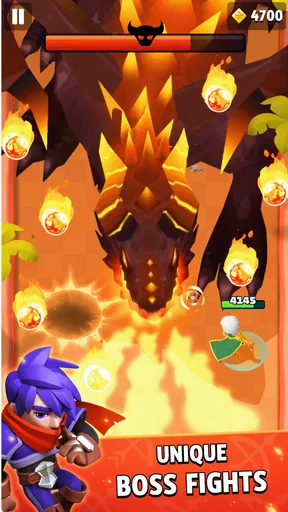
Archero is a fast-paced action game where you play as a lone archer battling through waves of enemies. Your main objective is to survive each level by dodging attacks, strategically using power-ups, and defeating increasingly challenging bosses to progress through the game.
How does the progression system work in Archero?
In Archero, progression is achieved by completing levels and earning experience points. As you progress, you unlock new abilities and equipment, which enhance your character’s skills. The game features a roguelike element, meaning each run is unique, with randomized abilities and challenges that keep the gameplay fresh.
Are there in-app purchases in Archero?
Yes, Archero includes in-app purchases that allow players to buy gems, coins, and energy. These can be used to acquire more powerful equipment, revive during a run, or unlock new abilities. While the game is free-to-play, spending can expedite progression and enhance the gaming experience.
Can Archero be played offline?
Archero requires an internet connection to play. This is mainly for syncing progress, accessing leaderboards, and receiving updates. While you can technically start a run without a connection, certain features and progression tracking will be unavailable until you reconnect.
What are the main challenges players face in Archero?
Players face a variety of challenges in Archero, including dodging complex enemy attack patterns, managing limited energy resources, and strategically choosing upgrades that best suit their play style. Additionally, each chapter introduces unique environments and obstacles that require adaptability and quick reflexes.


